What can intangible cultural heritage safeguarding tell us about the livelihood strategies of people, around the world? And what does it mean “livelihoods” when it comes to cultural expressions and heritage investigation?
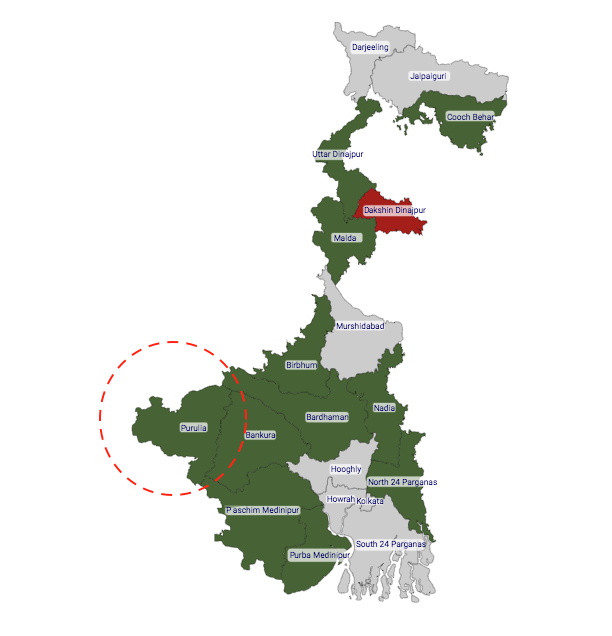
The importance of traditional cultural expressions in people’s lifestyle is one of the key incentive for the inscription of cultural expressions in UNESCO and national intangible heritage lists. However, the relations and translation of cultural expressions (and listed intangible heritage) as livelihood is yet unexplored: we still know relatively little about the interlinks between rural livelihood strategies/means and intangible heritage. A current approach to safeguarding cultural expressions is geared to these ends, including, notably, developing intangible heritage-based tourism as alternative livelihoods for artists’ communities. In West Bengal (see fig. above), where the case study is based, the projection and dissemination of local traditional cultures, such as folk-arts, for promoting opportunities of self-employment and increase the livelihoods for rural people is spreading.
My doctoral research addresses these questions by focusing on the circulations of the intangible heritage of Purulia chhau dance (from Purulia area) in a EU development project network (s) to point to what relations and paradoxes these circulations raise in terms of impacts, power relationships, practice of safeguarding and knowledge around the heritage of Purulia chhau and its safeguarding actor-network.
In doing so, my research explores how the intangible heritage of Purulia chhau – and its actor-network – come to terms with the uncertainties of international and national project arenas and actors – caught between the vulnerabilities of artists’ livelihoods and the project development strategies.
 Stefania Cardinale